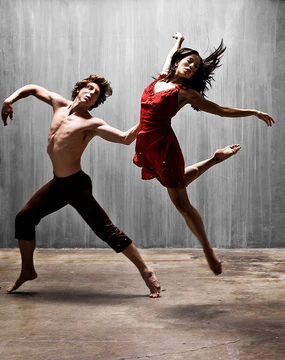
Breakdancing
Street dance born in the Bronx, now an Olympic sport.

Breakdancing, also called breaking, b-boying, or b-girling, is a style of street dance developed by African Americans and Puerto Ricans in the Bronx borough of New York City. It consists mainly of four kinds of movement—toprock, footwork, power moves, and freezes—and is typically set to songs containing drum breaks, especially in funk, soul, and hip-hop. Its modern dance elements originated among the poor youth of New York during the 1970s and early 1980s, and it is tied to the birth of hip-hop, whose DJs played songs featuring rhythmic breaks for dancers.
- field
- Street dance / Hip-hop culture
- known_for
- Four movement types: toprock, footwork, power moves, freezes
- origin
- Bronx, New York City, United States
- developed_by
- African Americans and Puerto Ricans
- era
- 1970s–early 1980s
Lore & Background
Breakdancing emerged from the parties of DJ Kool Herc, who noticed dancers waiting for percussive drum breaks to perform their most exciting moves. He began playing records with these drum fills back to back, creating extended sections for dancers. Early core movements developed at these parties, including the two-step toprock and the first uses of extended footwork. The terms 'b-boy' and 'b-girl' were coined by Kool Herc to describe dancers who came to his parties. The dance expanded culturally when Latinos, especially Puerto Ricans, began learning from African American practitioners. The formation of Rock Steady Crew exemplified this racial integration. This led to regular performances at hip-hop nightclubs and roles in films. Breaking has expanded globally with organizations and independent competitions.
Reader's Guide
Breakdancing holds significance as a foundational element of hip-hop culture, originating among marginalized youth in the Bronx as a form of creative expression and competition. Its development reflects the blending of African American and Puerto Rican influences, with roots in earlier African American dances like Juba and tap dance, as well as inspiration from James Brown, Kung Fu films, and gymnastics. The dance's terminology remains contested: many practitioners prefer 'breaking' over 'breakdancing,' which they view as a media-commercialized term.
Did You Know?
- The terms 'b-boy' and 'b-girl' were coined by DJ Kool Herc to describe dancers who came to his parties.
- Many early breakers cite James Brown as the first b-boy, and his music and dance embodied black pride and self-expression.
- The origin of the term 'breaking' is disputed; some say it refers to drum breaks, while early practitioners say it came from a slang term meaning 'going to the breaking point.'
Roots in African American and Global Dance Traditions
Breaking emerged from the Bronx borough of New York City, shaped by African American and Puerto Rican youth during the 1970s and early 1980s, yet its lineage reaches much further back. West African dances such as Juba, performed by enslaved people, introduced the cipher—a circle in which dancers take turns—and a competitive ethos into African American movement traditions. When Irish immigrants settled in the United States in the 1850s, their Jig merged with Juba to produce Tap, a form that dance researcher Harri Heinilä connects to every hip-hop-related style that followed. Early breakers like The Legendary Twins openly cited jazz-dance icons such as the Nicholas Brothers as direct inspiration. James Brown's music and choreography became a touchstone so central that many pioneers named him the first b-boy. Kung Fu films, especially those starring Bruce Lee, and gymnastics contributed acrobatic vocabulary including the flare. Capoeira's presence in New York raised questions of a shared African origin, though several original breakers rejected any direct line of influence.
Kool Herc and the Sedgwick Avenue Spark
Clive "Kool Herc" Campbell, a regular dancer at Bronx clubs like the Plaza Tunnel in the basement of the Concourse Plaza Hotel, transformed breaking from underground freestyling into a public spectacle. At those early gatherings, teens danced in ways locals called "going off," "burning," or "breaking," and competitive battles in which dancers acted out insults toward one another already existed. Herc's innovations in music selection and DJ technique were not abstract; they grew directly from watching breakers wait for percussive sections in records, prompting him to loop and extend those breaks so dancers could stay in the groove longer. The Sedgwick Avenue address is now sometimes called the birthplace of hip hop.
Naming the Culture: Breaking, B-Boying, and the Word Wars
The vocabulary surrounding the dance carries deep cultural politics. Practitioners commonly reject "breakdancing," arguing the label was coined by media seeking to commercialize what had always been called "breaking." Major events—the Olympics, Red Bull BC One, World Breaking Classic—use "breaking." DJ Kool Herc himself coined "b-boy" and "b-girl" to label the dancers who showed up at his parties; those terms later broadened to encompass anyone shaped by hip-hop culture. The etymology of "breaking" remains contested. One popular explanation ties it to the drum breaks looped in funk, soul, and hip-hop records. Yet Herc and several original breakers insist the word came from late-1960s and early-1970s African American slang meaning someone had "broke" or reached a breaking point, an exaggeration they applied to the dancing. The term "breakdancing" is also frequently misapplied as an umbrella for unrelated funk styles like popping and locking, a usage the community actively resists.
From Bronx Courtyards to the Olympic Podium
Breaking's movement vocabulary rests on four pillars—toprock, footwork, power moves, and freezes—typically performed over drum breaks in funk, soul, and hip-hop tracks. What began among poor New York youth in the 1970s has since spread worldwide, sustained by a network of organizations and independent competitions. The dance's most consequential institutional milestone arrived on December 7, 2020, when the International Olympic Committee, acting on a proposal from the World DanceSport Federation, voted to include breaking as an Olympic sport. This recognition validated decades of grassroots culture while raising questions about how a form rooted in individuality, battle, and community could be structured within the frameworks of Olympic competition.
Frequently Asked Questions
What is Breakdancing?
Breaking (also called b-boying or b-girling) is a street dance style built on four core movement categories: toprock, footwork, power moves, and freezes. It is typically performed to music with prominent drum breaks, drawing from funk, soul, and hip-hop genres.
Where and when did Breakdancing originate?
The dance emerged in the Bronx borough of New York City during the 1970s and early 1980s, created primarily by African American and Puerto Rican youth. It grew out of the same community that gave birth to hip-hop culture.
What are the four main elements of Breakdancing?
The style is organized around toprock (upright standing movements), footwork (close-to-the-ground patterns), power moves (dynamic spinning and flipping tricks), and freezes (holding a pose to end a move). Together these four categories form the full vocabulary a b-boy or b-girl uses in a session.
How is Breakdancing tied to hip-hop?
Early hip-hop DJs would extend the instrumental break sections of funk and soul records so dancers could showcase their skills. That close link between the music's rhythmic breaks and the dancers' movements cemented breaking as a foundational pillar of hip-hop culture.
More in Dance 1-24
Spotted an error? Know more?
This is a living reference — every entry is fact-audited, and reader corrections feed straight into our audit queue. Suggest an edit · See this site's audit record