Can-can
High-energy dance from 1830s French music halls.

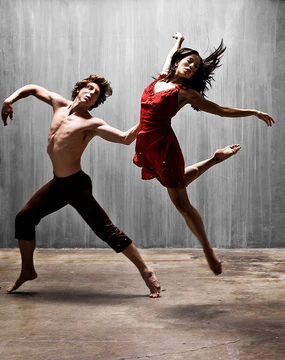
The can-can (also spelled cancan) is a high-energy, physically demanding dance that became a popular music-hall dance in the 1830s, continuing in popularity in French cabaret to modern days. Originally danced by couples, it is traditionally associated with a chorus line of female dancers, featuring vigorous manipulation of skirts and petticoats, along with high kicks, splits, and cartwheels. The dance is believed to have evolved from the final figure in the quadrille, a social dance for four or more couples.
- era
- 1830s to present
Lore & Background
The can-can is believed to have evolved from the final figure in the quadrille, a social dance for four or more couples. The dance was considered scandalous, partly because women wore pantalettes with an open crotch, and high kicks were intentionally revealing. By the 1890s, dancers wore special closed underwear to maintain modesty, and Moulin Rouge management actually required dancers to wear closed drawers (culottes) to comply with decency laws. The can-can faced bans and arrests in Paris during the 1840s and 1860s, not specifically in the early 1830s.
Reader's Guide
The can-can's significance lies in its evolution from a scandalous social dance to a celebrated symbol of French cabaret. By the 1890s, stars like La Goulue and Jane Avril earned high pay at the Moulin Rouge, while male dancer Valentin le Désossé also gained prominence. Outside France, the can-can achieved popularity in music halls with choreographed chorus-line routines, which were imported back into France in the 1920s for tourists. Its legacy endures in modern productions such as Baz Luhrmann's Moulin Rouge! and in Disney parks' It's a Small World ride.
Did You Know?
- The can-can is believed to have evolved from the final figure in the quadrille, a social dance for four or more couples.
- In the 1830s, groups of men, particularly students, often danced the can-can at public dance-halls.
Origins and the Scandal of the Dance Floor
The can-can traces its roots to the concluding figure of the quadrille, a social dance performed by multiple couples. While the precise lineage remains unclear, the acrobatic vocabulary of the dance may owe a debt to Charles-François Mazurier, an entertainer of the 1820s celebrated for his mime and jump splits. When the dance took hold in the 1840s, it provoked genuine moral panic. Women of the period wore pantalettes with an open crotch, and the deliberately high kicks of the can-can made the garment a source of public embarrassment. Authorities occasionally arrested dancers, and there were periodic attempts to suppress the form, though no formal ban is documented. Ironically, throughout the 1830s it was largely groups of men—especially students—who performed the dance in public halls.
From Solo Stars to the Moulin Rouge Spectacle
By the 1890s the can-can had matured into a viable profession. Dancers such as La Goulue and Jane Avril commanded substantial fees for their appearances at the Moulin Rouge and other Parisian venues, marking a shift from amateur enthusiasm to genuine stardom. On the male side, Valentin le Désossé—literally "Valentin the Boneless"—gained recognition as a frequent partner of La Goulue and as the most prominent male can-can performer of the era. The individual, improvisatory style that flourished during the Second Empire and the fin de siècle would eventually be distilled into something far more structured. In the 1920s, choreographer Pierre Sandrini crafted the "French Cancan" at the Moulin Rouge, a production that blended the spontaneous flair of Parisian dance-halls with the disciplined chorus-line conventions of British and American music halls. This synthesis transformed the can-can from a solo or small-group affair into the high-energy, synchronized spectacle that audiences around the world would come to expect, with room still reserved for individual dancers to showcase their personal "specialities" within the larger choreography.
Crossing Borders: The Can-Can Goes Global
The production featured cymbals and triangles played by the corps de ballet, and the audience responded with enthusiasm. Yet the dance's American popularity proved fleeting; by the 1890s it had fallen out of favor in New York dance halls, supplanted by the hoochie coochie. A more durable foothold was found in Alaska and the Yukon, where theatrical performances incorporating can-can dancers continue to this day. Meanwhile, the choreographed, chorus-line version of the dance that flourished in British and American music halls was imported back into France in the 1920s, specifically to entertain tourists. This circular migration gave birth to the "French Cancan": a highly structured routine lasting ten minutes or more, built around signature moves such as the high kick, the rond de jambe, the port d'armes, the cartwheel, and the grand écart. It became standard practice for performers to scream and yelp during execution, adding a layer of theatrical exuberance to the already physically demanding display.
The Can-Can in Music, Paint, and Screen
The can-can's influence radiated far beyond the dance floor. In the visual arts, Henri de Toulouse-Lautrec produced numerous paintings and posters of can-can dancers, joined by Georges Seurat, Georges Rouault, and Pablo Picasso. The dance appears in ballet works by Léonide Massine, in the finale of Ponchielli's La Gioconda, and in Baz Luhrmann's Moulin Rouge!.
Frequently Asked Questions
What is the Can-can?
The Can-can is a high-energy, physically demanding dance that originated in French music halls during the 1830s. It is best known for its chorus-line format featuring vigorous skirt and petticoat manipulation, high kicks, splits, and cartwheels.
Where did the Can-can come from?
The dance is believed to have evolved out of the final figure of the quadrille, a social dance performed by four or more couples. It was originally danced by couples before shifting to the solo-female chorus-line format we recognize today.
What moves define a Can-can performance?
A typical routine centers on energetic kicking, splits, and cartwheels combined with dramatic handling of skirts and petticoats. The overall effect is fast, acrobatic, and highly theatrical.
Who performs the Can-can?
While it began as a couple's dance, the Can-can is traditionally performed by a chorus line of female dancers. It has remained a staple of French cabaret and continues to appear in stage productions worldwide.
Is the Can-can still performed today?
Yes. The dance has maintained continuous popularity from its 1830s music-hall roots through French cabaret into the present day, making it one of the longest-running stage dance forms in Western tradition.
More in Dance 1-24
Spotted an error? Know more?
This is a living reference — every entry is fact-audited, and reader corrections feed straight into our audit queue. Suggest an edit · See this site's audit record