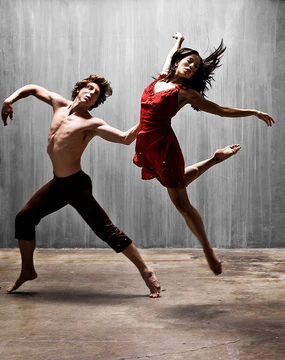
Dance crazes
Short-lived dances that define their era.

Dance crazes, also known as novelty and fad dances, are dances characterized by a short burst of popularity. Some, like the Twist, Y.M.C.A., and the Hokey Pokey, have shown much longer-lasting popularity. They are also called dance fads or dance crazes.
- field
- Dance
- known_for
- Short-lived popular dances often commercialized and exploited alongside the pop music market
Lore & Background
As the pop music market exploded in the late 1950s, dance fads were commercialized and exploited. From the 1950s to the 1970s, new dance fads appeared almost every week. Many were popularized versions of new styles or steps created by African-American dancers who frequented clubs and discothèques in major U.S. cities like New York, Philadelphia, and Detroit. Among these were the Madison, 'The Swim', the 'Mashed Potato', 'The Twist', 'The Frug', 'The Watusi', 'The Shake', and 'The Hitch hike'. Many 1950s and 1960s dance crazes had animal names, including 'The Chicken', 'The Pony', and 'The Dog'. Standardized versions of dance moves were published in dance and teen magazines, often choreographed to popular songs. Songs such as 'The Loco-Motion' were specifically written with the intention of creating a new dance, and many more pop hits, such as 'Mashed Potato Time' by Dee Dee Sharp, were written to cash in on recent successful novelties. In the early 1970s, disco spawned a succession of dance fads including the Bump, the Hustle, and the Y.M.C.A. This continued in the 1980s with 'Walk like an Egyptian', in the 1990s with the 'Macarena', in the 2000s with 'The Ketchup Song', and in the 2010s with 'Gangnam Style'. Contemporary sources for dance crazes include music videos and movies.
Reader's Guide
Dance crazes are significant as markers of popular culture, often tied to specific songs and eras. They are in fashion at the time of their popularity and come to be associated with a specific time period, evoking particular forms of nostalgia when revived. Some fad dances are meant to be danced individually as solos, others as partner dances, and yet others in groups. Some were of freestyle type, with no particular step patterns, distinguished only by the style of movement (Twist, Shake, Swim, Pony, Hitch hike). Only some have remained to the modern day, sometimes only as the name of a step (Suzie Q, Shimmy) or of a style (Mashed Potato) in a recognized dance. Their legacy lies in how they reflect the commercial exploitation of dance in the pop music market, from the late 1950s onward, and how they continue to appear through music videos and movies.
Did You Know?
- From the 1950s to the 1970s, new dance fads appeared almost every week.
- Many 1950s and 1960s dance crazes had animal names, including 'The Chicken', 'The Pony', and 'The Dog'.
- Songs such as 'The Loco-Motion' were specifically written with the intention of creating a new dance.
Roots in the Urban Clubs
The dance crazes that captured mainstream America in the 1950s and 1960s did not originate in boardrooms or recording studios. They were born in the clubs and discothèques of major U.S. cities—New York, Philadelphia, and Detroit—where African-American dancers developed new styles and steps. The pop music market, which exploded in the late 1950s, quickly recognized the commercial potential of these movements and set about exploiting them. What had been organic, community-driven expression was repackaged, renamed, and pushed into the mainstream. The naming conventions of the era reveal a playful, almost whimsical sensibility: many of these dances carried animal names, such as The Chicken, The Pony, and The Dog, alongside more descriptive titles like The Twist, The Frug, The Watusi, The Shake, and The Hitch Hike. The pace was staggering—new dance fads appeared almost weekly throughout the 1950s and 1960s, each one a brief flash of cultural energy before the next wave rolled in.
The Business Machine Behind a Move
Once a dance caught public attention, a commercial machinery sprang into action. Dance and teen magazines published standardized versions of the moves, often choreographed to fit a particular popular song, turning a street-born gesture into a reproducible routine that anyone could follow. Some pop hits were composed with the explicit intention of spawning a new dance—"The Loco-Motion" is a prime example—while others, like Dee Dee Sharp's "Mashed Potato Time," were written to cash in on a novelty that had already proven successful. The result was a self-reinforcing cycle: a dance trended, songs were written to exploit it, magazines codified the steps, and the pattern repeated. The pop music market handled the commercialization of moves originally created by African-American dancers in urban clubs, transforming organic expression into a product for mass consumption.
A Decade-by-Decade Progression
The landscape of dance crazes shifted with each new decade, mirroring broader changes in music and media. The 1950s and 1960s produced a rapid-fire succession of named moves, many bearing animal or action-based titles. The early 1970s brought disco, which spawned its own wave of fads including the Bump, the Hustle, and the Y.M.C.A. The 1980s saw the popular song "Walk Like an Egyptian" turn a simple gesture into a cultural phenomenon. The 1990s delivered the "Macarena," the 2000s brought "The Ketchup Song," and the 2010s were defined by "Gangnam Style." Alongside the dances themselves, the channels through which they spread evolved dramatically. In the mid-twentieth century, dance and teen magazines were the primary vectors for disseminating new moves to a wide audience. By the 2000s and 2010s, music videos and movies had become the dominant contemporary sources for launching new dance crazes, reaching far larger and more immediate audiences than print media ever could.
What Survives the Hype
Most dance crazes burn bright and fade quickly, their popularity lasting only a short burst before the next trend replaces them. Yet a handful have defied the cycle. The Twist, the Y.M.C.A., and the Hokey Pokey have maintained recognition far beyond their original moments of peak popularity. Others have been absorbed into the broader vocabulary of dance, surviving not as standalone crazes but as the name of a specific step—Suzie Q, Shimmy—or as a descriptor of a style, such as Mashed Potato, within a recognized dance form. The format of these dances also varied widely: some were designed for solo freestyle expression with no fixed step pattern, others required a partner, and still others were performed in groups. Perhaps most enduring is the emotional connection a dance craze forges with its era. Because each fad becomes tightly associated with a specific time period, reviving it decades later can trigger a powerful wave of nostalgia, transporting participants and observers back to the cultural moment that first made the move feel new.
Frequently Asked Questions
What are dance crazes in the context of dance history?
Dance crazes, sometimes called novelty or fad dances, are short-lived movement styles that surge in popularity for a brief period before fading from mainstream attention. They tend to be tightly tied to a specific pop-culture moment rather than evolving into a sustained dance tradition.
What separates a dance craze from a long-lasting dance form?
A dance craze is defined by its rapid rise and fall in public interest, whereas styles like the Twist or the Y.M.C.A. have broken that pattern and remained recognizable for decades. The key distinction is the compressed lifespan of the craze versus the generational persistence of a classic.
Why are dance crazes often linked to the pop music industry?
Craze dances are frequently commercialized and marketed alongside hit records, making them a promotional tool for the music market. Their short shelf life mirrors the fast turnover of chart singles, so the dance and the song rise and fall together.
How do dance crazes capture the spirit of a particular era?
Because they explode in popularity during a narrow cultural window, crazes act as a snapshot of what a generation found fun or rebellious at that moment. Once the cultural mood shifts, the dance typically loses its relevance and is remembered mainly as a period marker.
Are all dance crazes purely short-lived, or do some outlast their initial hype?
Most crazes fade quickly, but a handful—such as the Hokey Pokey, the Twist, and the Y.M.C.A.—have crossed into lasting cultural recognition well beyond their original spike. These outliers are the exception that proves the rule of the typical craze's brief lifespan.
More in Dance 1-24
Spotted an error? Know more?
This is a living reference — every entry is fact-audited, and reader corrections feed straight into our audit queue. Suggest an edit · See this site's audit record