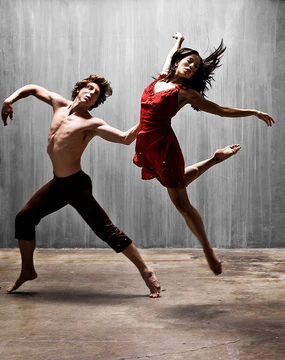
Social dance
Dances for participation, not performance, across cultures and eras.

Social dances are dances that have social functions and context, intended for participation rather than performance. They are often danced merely to socialize and for entertainment, though they may have ceremonial, competitive, and erotic functions. Many social dances of European origin are in recent centuries partner dances, but elsewhere there may instead be circle dances or line dances.
- field
- Social dance
- known_for
- Participation-based dances with social, ceremonial, and entertainment functions
Lore & Background
In the early 20th-century United States, Americans paired Victorian dances like the Two-Step with Ragtime music. Other dances included the African American Cakewalk and animal dances such as the Turkey Trot. The most popular social dance was the One-Step, where couples took one step per beat. The phonograph record shifted dancing to recorded music. Swing dance in the 1930s grew in popularity, with forms like Lindy Hop and West Coast Swing surviving. Rock 'n' roll in the 1950s brought rebelliousness, with couples dancing as individuals for the first time. Latin American dance, especially from Cuba, blended Spanish colonial, Indigenous Taíno, and African influences, spreading to the U.S. through immigration. The 1950s saw dance crazes like the mambo and cha-cha-chá, popularized by bandleaders like Pérez Prado. By the late 1960s and early 1970s, Cuban and Puerto Rican influences converged into salsa, a hybrid genre popularized by figures such as Johnny Pacheco of Fania Records. Salsa congresses later expanded to include bachata, Kizomba, and Zouk.
Reader's Guide
Social dance matters because it reflects and shapes social values across history. From the hierarchical court branles of the Baroque Era to the egalitarian waltz of the Regency Era, dance has mirrored societal shifts toward formality or freedom. In the 20th century, American social dances like the One-Step and swing made participation accessible to all, while rock 'n' roll and Latin styles like mambo and salsa introduced new forms of expression and cultural exchange. The evolution from live music to recorded phonograph records changed how people danced, and the rise of salsa congresses created global communities around partner dancing. Social dance remains a living record of cultural blending, as seen in the fusion of Spanish, Taíno, and African elements in Cuban dances that spread to the United States. Its legacy endures in the continued popularity of swing, salsa, and newer imports like Kizomba and Zouk, demonstrating that social dance is both a historical artifact and a dynamic, ongoing practice.
Did You Know?
- The 15th century is the first period from which written records of dances exist.
- In the waltz, neither partner led; individuals danced as equals.
- The phonograph record marked a shift toward dancing to recorded music.
- Salsa congresses originally focused on salsa but expanded to include bachata, Kizomba, and Zouk.
Frequently Asked Questions
What is Social dance?
Social dance refers to dances designed for everyday participation among people rather than for a stage audience. They exist to connect dancers socially, celebrate occasions, or simply provide fun in a shared setting.
How is Social dance different from performance dance?
The core distinction is intent: social dances are made for the people on the floor to join in, while performance dances are crafted to be watched by spectators. A social dance's success is measured by how many people are dancing, not by how impressive the choreography looks from the audience.
What roles does Social dance play in a community?
Beyond pure entertainment, social dances can carry ceremonial weight, serve competitive purposes, or function as a form of courtship and romantic expression. In many traditions the same dance might shift between these roles depending on the occasion.
Does Social dance always involve partners?
No. While many European-origin social dances in recent centuries are partner dances, other cultures and regions favor circle dances, line dances, or other group formations. The unifying thread is communal participation, not a specific holding pattern.
Why is Social dance considered foundational to dance culture?
Because it is the form most people actually encounter in daily life, it keeps dance traditions alive across generations without relying on professional companies or academies. Its participatory nature means knowledge and style are passed down through lived experience rather than formal instruction alone.
More in Dance 1-24
Spotted an error? Know more?
This is a living reference — every entry is fact-audited, and reader corrections feed straight into our audit queue. Suggest an edit · See this site's audit record